
Why Ads Are Scrutinized More Than Organic Results







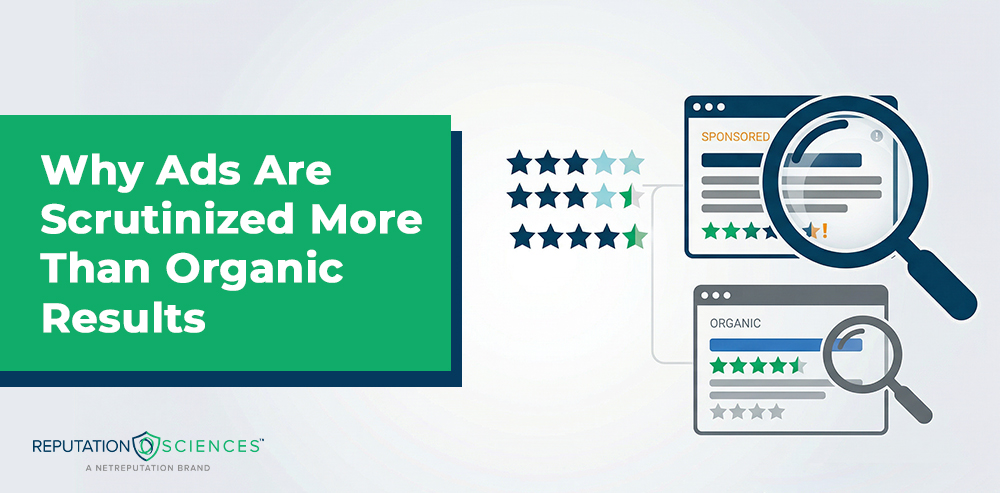
In 2023 alone, Google rejected billions of ads for policy violations. Organic search results did not face anything close to that level of immediate enforcement. This gap isn’t accidental; it exists because ads and organic results play fundamentally different roles in search.
Ads move money fast, whereas organic results move influence slowly. Consequently, platforms regulate those two forces very differently.
Ads Are Commercial Speech With Immediate Consequences
Advertising is paid, persuasive, and public communication. That combination triggers stricter oversight.
When a business runs ads, it isn’t just publishing content. Instead, it pays to influence behavior at a specific moment — when users are ready to buy, sign up, or take action. For example, a search ad targeting “emergency plumber” or “debt relief” reaches people under pressure. Similarly, a display ad promoting financial products or health services can affect real decisions in minutes.
Because ads can:
- drive sales instantly
- generate leads at scale
- influence shoppers during high-intent moments
platforms treat them as high-risk content that requires precise targeting and compliance.
Organic listings rarely create that kind of immediate impact. They influence consideration over time through browsing, discovery, and comparison.
Ads Involve Direct Platform Liability
When Google, Microsoft, or LinkedIn shows an ad, it is not a neutral observer. Instead, they sell placement and manage campaigns that connect businesses with the right audience.
This creates legal and reputational exposure. If an ad misrepresents a product, violates consumer protection rules, or targets the wrong audience, regulators look not only at the advertiser but also at the platform.
That’s why:
- ads undergo review before going live
- claims must match landing pages
- restricted products face extra checks
- entire accounts can be suspended
Organic search doesn’t create that same transactional liability. Rankings are algorithmic, while ads are contractual agreements that must meet strict policies to protect users and companies alike.
Paid Reach Requires Stronger Controls
Modern advertising platforms offer precision that organic search cannot.
Google Ads, Microsoft Advertising, LinkedIn Sponsored Content, and Pinterest ads all allow businesses to:
- reach specific audiences based on intent, job role, behavior, or interests
- target users at the right time with relevant offers
- optimize delivery in real time to maximize conversions
- control budget down to the click or impression
Such power demands guardrails and ongoing support to ensure compliance and effectiveness.
If ads lacked tight controls, bad actors could exploit targeting systems to mislead users at scale. Therefore, ad platforms enforce strict policies on language, offers, landing pages, and even visual design.
Organic results don’t offer that level of targeting control. They rely on relevance signals and industry insights rather than direct selection.
Ads Are Designed to Convert, Not Just Inform
Organic content often educates and builds trust over time. However, ads are built to convert quickly.
The core goal of advertising is action:
- click
- buy
- sign up
- request a quote
That’s why platforms evaluate ads against performance and intent models like AIDA — attention, interest, desire, action. Each ad is expected to deliver one clear message to one audience with one primary call to action.
When ads exaggerate, obscure details, or mismatch intent, the damage is immediate. Users click, money changes hands, and trust erodes rapidly.
Organic content can mislead, too, but its impact unfolds gradually through rankings and engagement signals.
Ads Can Be Created and Scaled in Minutes
Speed is another reason scrutiny is intense.
Text ads can launch in minutes. Display assets can be generated automatically. Video ads — especially short-form vertical video under 60 seconds — now scale rapidly across platforms.
In 2026, the highest-ROI ad formats are:
- short vertical video
- personalized display
- community-led storytelling
These formats allow businesses to quickly engage audiences and continue to optimize campaigns based on real-time data and recommendations.
Organic search has friction. It takes time to rank, earn links, and build authority. Ads skip that friction entirely. Platforms compensate with aggressive review systems and resources to help advertisers meet standards.
Ads Depend on Data, Which Raises the Stakes
Modern advertising depends heavily on data.
As third-party cookies decline, platforms rely on owned data, first-party signals, and real-time behavior to model audiences and provide precise targeting.
Ads now adjust dynamically based on user behavior, context, and engagement patterns to connect with the right audience at the right time.
That introduces:
- privacy concerns
- data accuracy risks
- targeting sensitivity
Organic search does not operate on the same data dependency. Ads do. Therefore, platforms scrutinize how advertisers collect, use, and apply data — and shut things down quickly when rules are broken.
Why Organic Results Face Slower Enforcement
Organic results are governed by algorithms, not contracts.
Search engines evaluate organic pages using:
- relevance
- authority
- engagement
- consistency over time
If content violates quality guidelines, rankings decline. If trust erodes, traffic fades. These are delayed consequences, but they’re real.
The difference is speed. Ads can cause harm quickly. Organic results rarely do.
What This Means for Businesses
If your business uses ads, scrutiny is part of the deal.
You pay for:
- speed
- reach
- control
- precision
In exchange, platforms demand:
- accuracy
- transparency
- alignment between ad and site
- ongoing compliance
Organic search rewards patience and credibility. Ads reward clarity and discipline.
The strongest brands don’t treat ads as shortcuts. Instead, they treat them as high-risk, high-reward tools that require constant oversight and management.
How to Get Started with Ads Successfully
To get the most out of ads, businesses should select the platform where their target audience is most active and engaged. Use available search help and resources to create campaigns that align with your specific goals.
You can manage your ads independently or partner with experts—our team specializes in identifying the best keywords, crafting compelling ad copy, and managing bids to maximize your visibility on Google search.
Within weeks, your ads will reach new customers, driving high-value conversions to grow your business. For additional support in managing your online reputation and optimizing ad performance, consider trusted specialists like Reputationsciences.com.
Whether you choose to manage your ads yourself or collaborate with our experts, our streamlined approach ensures your ads are quick, efficient, and effective, helping your business achieve steady growth.
